
Wolf Cut Blog
Korean Wolf Cut vs Classic Wolf Cut: Which One Feels More Wearable?
A Korean wolf cut looks softer and more blended, while the classic version shows stronger crown contrast and a clearer nape. The better choice depends on your routine.

These two cuts get mixed together all the time, but they do not land the same way in real life. A Korean wolf cut is usually softer through the crown, smoother around the face, and easier to wear in everyday settings. A classic wolf cut pushes the contrast harder and looks more obviously shag-meets-mullet.
As of May 21, 2026, most first-timers still choose the Korean direction because it gives them the wolf cut mood without forcing them into the boldest version on day one.
The Fast Difference
Think of it this way:
- Korean wolf cut: softer crown, smoother connection, lighter fringe, cleaner finish
- Classic wolf cut: choppier top, more visible texture, stronger nape contrast, louder silhouette
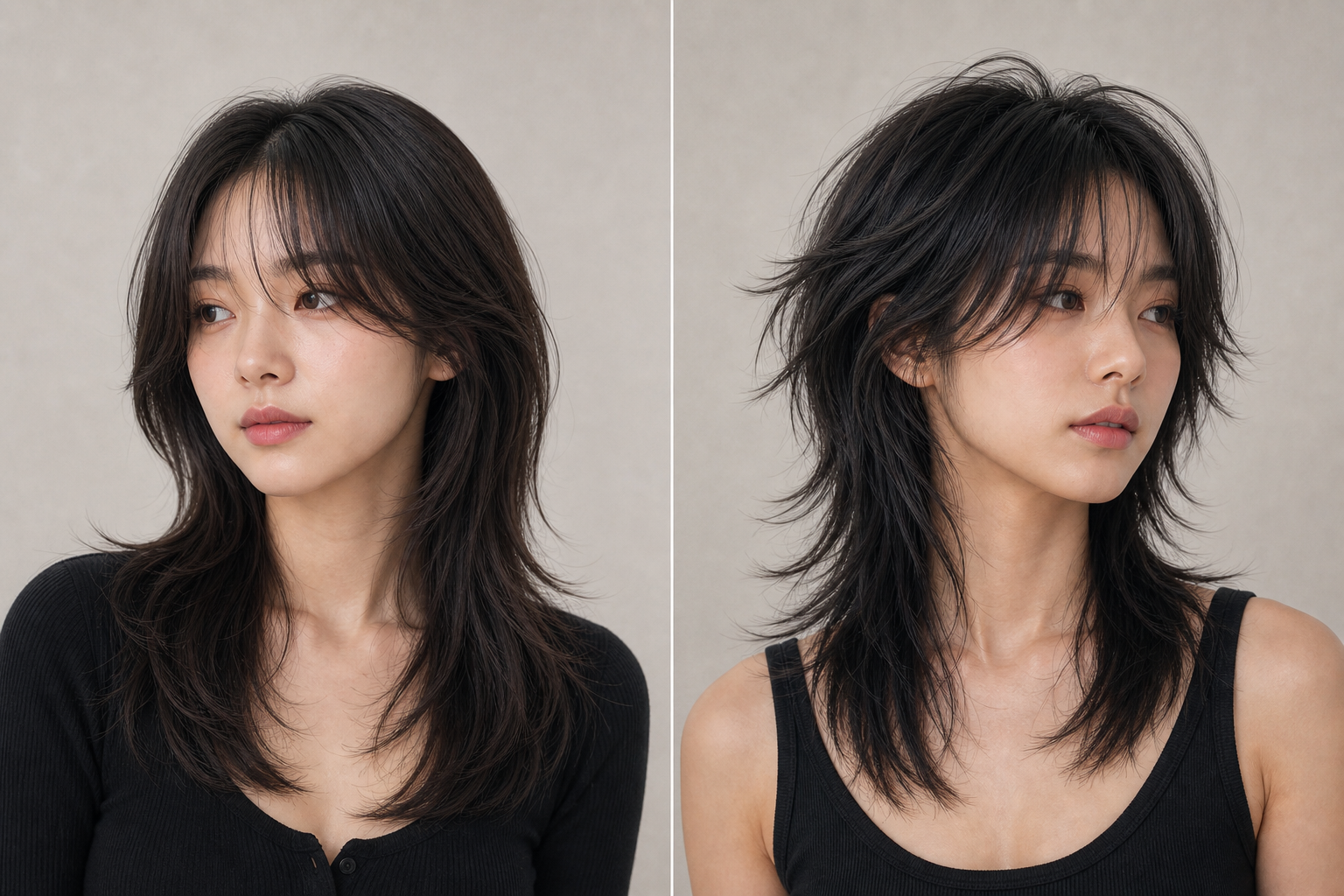
Which One Is Easier To Wear?
For most people, the Korean version is easier because it asks less from the styling routine and grows out more gently.
| Version | Best for | Watch out for | | --- | --- | --- | | Korean wolf cut | first-timers, office-friendly looks, soft fringe lovers | can feel too subtle if you want a bold edge | | Classic wolf cut | strong texture, visible crown, more attitude | needs a clearer plan for bangs and nape |
If you are still unsure whether you even want wolf-cut energy, read wolf cut vs shag vs mullet first.
What To Ask For in the Salon
For a Korean direction:
I want a soft wolf cut with blended crown layers, airy face framing, and a controlled nape. Keep the contrast smooth, not too choppy.For a classic direction:
I want more visible crown texture, stronger separation through the top, and a clearer wolf-cut shape in the back.Those scripts stop the stylist from guessing what you mean by "wolf cut."
Who Should Lean Korean
- You want a softer first try.
- You like curtain bangs more than heavy fringe.
- You need the cut to look polished with minimal styling.
- You want a shape that grows out less dramatically.
The Korean wolf cut guide goes deeper into the softer version.
Who Should Lean Classic
- You want obvious texture in photos and real life.
- You are open to more styling and more regular trims.
- You like a stronger shag or mullet influence.
- You do not mind a more directional silhouette.
Short lengths make the classic version even louder, so compare it with a short wolf cut before you decide.
Preview Both on the Same Selfie
This is where the example starts to look usable. Before the appointment, upload one clear front photo to the AI wolf cut try-on and compare a soft Korean version with a classic textured version. Wolfcut Online accepts JPEG, PNG, and WebP images up to 10 MB, which is enough for a clean salon-planning preview.
If the classic version makes the crown feel too high or the sides too sharp, go softer. If the Korean version disappears into your current hair, ask for more top texture or a clearer nape.
FAQ
Is a Korean wolf cut the same as a classic wolf cut? No. The Korean version is usually softer, more blended, and less aggressive.
Which one is better for first-timers? Usually the Korean version because it feels easier to wear and grow out.
Can straight hair do both? Yes, but straight hair often shows the difference even more clearly, especially around the crown and fringe.